Bridgeland vs Fairfield
Bridgeland and Fairfield both offer strong schools and family-friendly living, but the real tradeoff is newness and amenities versus value and proximity. This post breaks down what buyers are actually paying for and what often gets overlooked once the marketing fades.
Why So Many Buyers Start With Bridgeland
When I first moved to Houston and started researching neighborhoods, I was convinced I wanted to live in Towne Lake. The lake, the boat taxi, the island, the community events, the beach-style water park. It honestly felt like I was being sold a vacation timeshare. I see the same thing come up when families start comparing Towne Lake and other Cypress lake communities.
Where I came from, neighborhoods were just neighborhoods. You picked a location, a school zone, a house you liked, and moved on. There weren’t glossy brochures selling you on the home and the lifestyle. That whole concept was new to me.
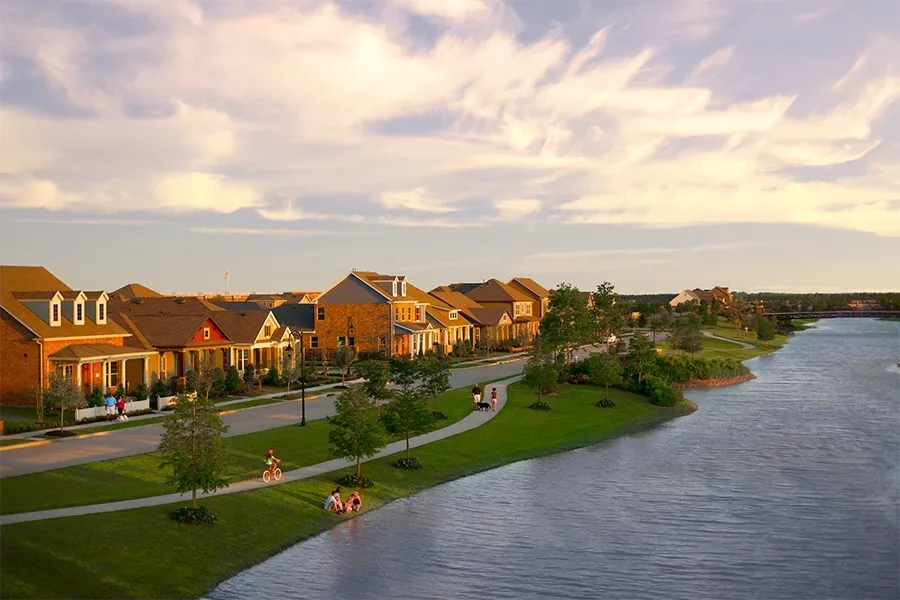
As I dug deeper into Cypress, I found Bridgeland, and that felt much more aligned with my style. The trails, the pocket parks, the green space. Bridgeland itself feels different depending on where you live, which is something I break down more in Bridgeland East of 99 vs West of 99. It genuinely feels like a little nature sanctuary dropped into the middle of suburbia.
How Online Marketing Shapes What Buyers See First
What I didn’t realize at the time, coming from out of state, was how many other options actually exist in Cypress.
I was heavily influenced early on by Bridgeland and Towne Lake because they are everywhere online. Massive developer budgets, massive builder budgets, and constant content feeding the algorithm. They are also huge anchor communities, so they dominate relocation searches and conversations.
But if I knew then what I know now, I would have realized there are far more neighborhoods with a similar feel, just without the nonstop marketing behind them.
What I Didn’t Realize
Looking back, I wasn’t really choosing between Bridgeland and Towne Lake. I was choosing between what was being marketed the hardest and what would realistically fit our day-to-day life long term.
At the time, I thought I was simply picking a neighborhood. In reality, I was choosing how much I wanted to pay every month for certain features and how often we would actually use them. I was choosing between newer, heavily amenitized communities and more established neighborhoods that offered similar fundamentals without the same premium attached.
That distinction wasn’t clear to me at the beginning, and I see a lot of buyers make the same assumption.
Why Fairfield Often Comes Later
Looking back now, my husband and I always say we would have seriously considered Fairfield if we had known more at the time. Saving roughly six hundred dollars a month changes real life. That’s groceries, kids’ activities, travel, or simply having more breathing room. There are also a few things Fairfield offers that newer parts of Cypress don’t, which surprised me once I dug deeper.
Yes, the homes in Fairfield are older, and many need cosmetic updating. But Fairfield feeds into the same high school as Bridgeland. It’s closer to the center of Cypress and closer to everyday conveniences like the outlets, movie theaters, HomeGoods, and restaurants. You’re also closer to Highway 290 than many parts of Bridgeland, which matters more than people expect once the newness wears off.
Fairfield is also still very well maintained in many sections, which surprises many buyers who assume older automatically means neglected.
Value vs Newness: The Real Fairfield Tradeoff
From a value standpoint, Fairfield often makes more sense for families who care about fundamentals over flash.
You typically get more house, larger lots, and more pool options for the money. The tradeoff isn’t schools or lifestyle. The tradeoff is age and aesthetics. You’re choosing established over brand new, and value over marketing-driven premiums.
Where Bridgeland Still Makes Sense
None of this is meant to say Bridgeland is a bad choice. You do get what you pay for.
Bridgeland offers newer homes, a more extensive trail system, stronger walkability, and long-term planning that continues to evolve. Bridgeland Central will eventually be a major draw, and for some families, that future vision is absolutely worth paying more for. Even within Bridgeland, the experience can feel very different, especially when comparing Prairieland and Creekland.
So Which One Is the Better Fit?
Bridgeland tends to make sense for buyers who value newer construction, walkability, and a master-planned community that will continue to grow and change over time.
Fairfield tends to make sense for buyers who want strong schools, proximity to daily life, better overall value, and are open to cosmetic updates rather than paying a premium for newness. This is something I see a lot when buyers compare Cypress Creek Lakes to other Cypress neighborhoods.
Personally, I actually love Fairfield. And the truth is, you really can’t go wrong with either neighborhood. The key is understanding what you’re actually paying for and what you’re not, rather than just responding to what’s marketed the loudest.
If you’re comparing neighborhoods in Cypress and trying to figure out what truly fits your family long term, I’m always happy to talk it through.


